"You have to evolve with time, or you dissolve with time."
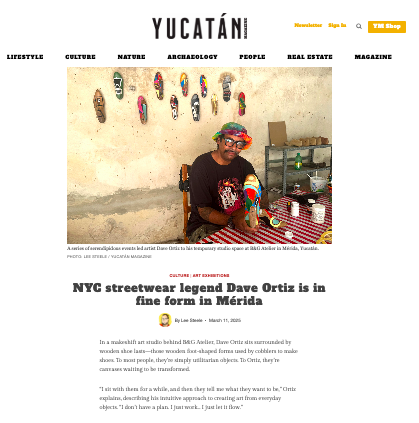
I'm a New York artist of Puerto Rican descent. I work in painting, silk-screen printing, and drawing. I'm part of the generation of American Hispanic artists who found his voice first in the streets and that never really left me. My work circles around heritage, cultural assimilation, and what it means to carry both worlds at once.
I grew up in East New York in the '70s and '80s, right in the middle of the graffiti explosion. Where I lived was where they parked the trains at night. That wasn't just my neighborhood that was my education. Color, lettering, scale, energy I learned all of it standing between those cars before anyone called it art school.
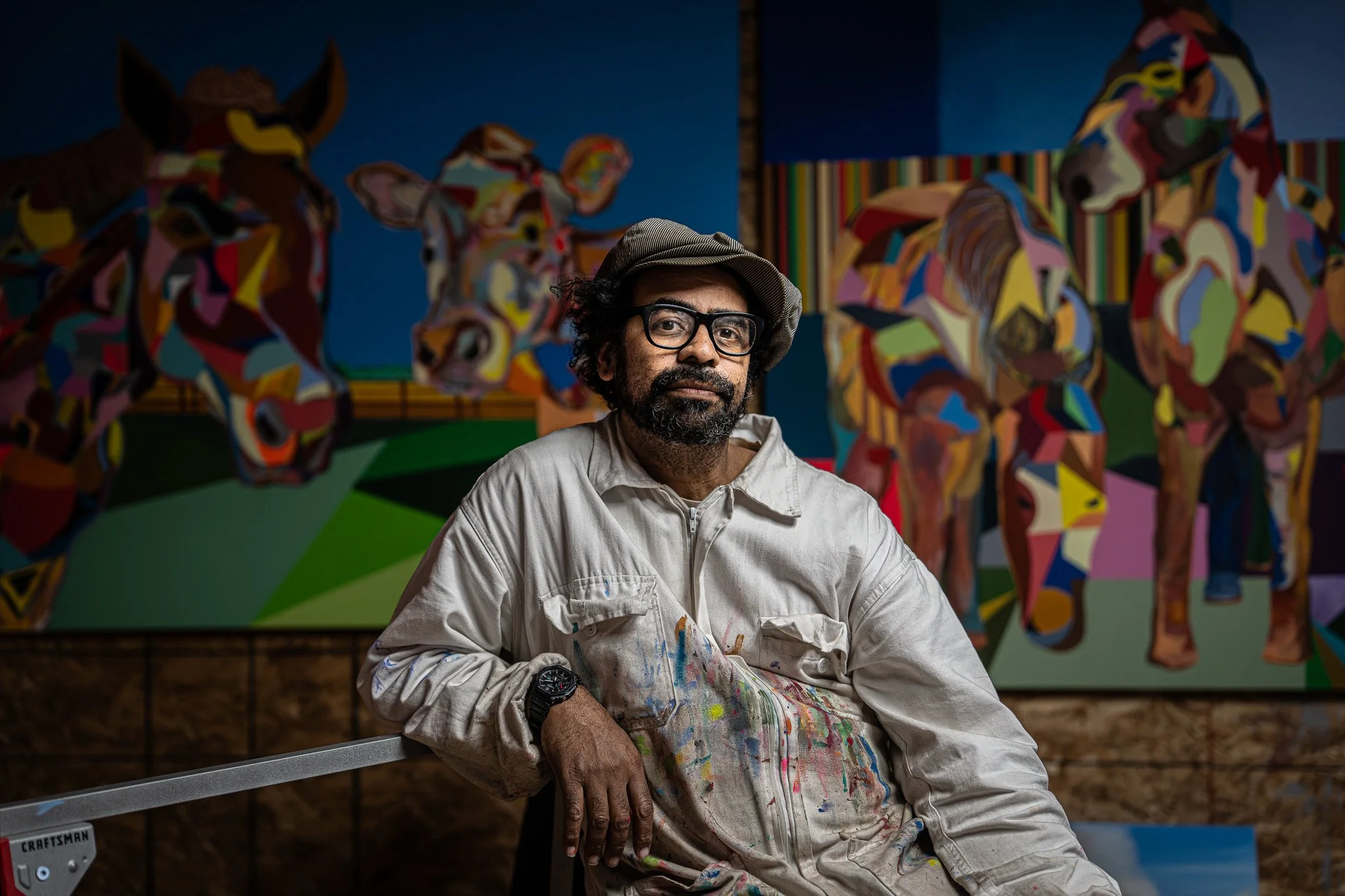
Eventually I turned toward fine art and painting. I studied at FIT life drawing, sculpture, perspective, color theory took what I needed, and went to build my life as an artist. What came out of that is a practice that moves between abstract and figurative, between spray paint and acrylic, between the street and the studio. I've been described as a colorist, and I'll take that. Color is the thing that tells me when a painting is alive.
My work has been shown in solo and group exhibitions in New York and internationally, and is held in private collections. I'm represented by Claire Oliver Gallery.
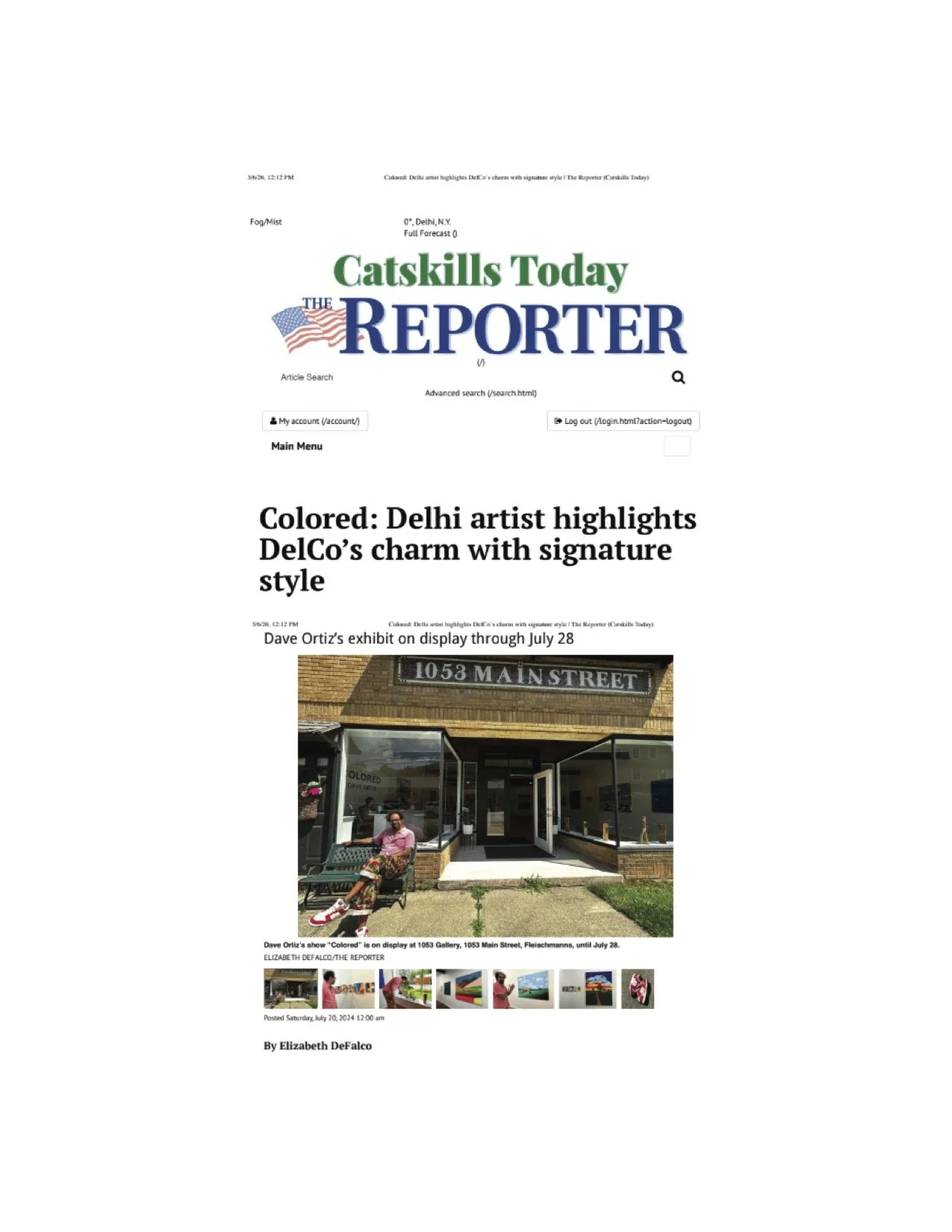
I live and work between Delhi, NY and New York City.
ARTIST STATEMENT
I paint what I see. Or more precisely, everything I see at once.
My work has grown into geometric landscapes built on perspective and abstraction I give the viewer something familiar, then I break it open. A barn. A tractor. A horse. A rooster. After 51 years in New York City, I moved to rural upstate New York, and yeah, the subjects changed completely. But the approach hasn’t moved an inch.
Color does my heavy lifting. It’s not decoration. It’s not an afterthought. Color is the feeling itself the thing that tells me when something is alive and when it isn’t.
I grew up in East New York in the ‘80s. Color wasn’t something I studied it was something I lived. Graffiti was at its absolute peak, and where I lived was where they parked the trains at night. As kids we played in the layups, surrounded by some of the most ambitious, fearless work being made anywhere in the world by teenagers and grown men like Futura 2000, Lee Quiñones, IZ THE WIZ, Seen, Quik. Men who would go on to shape art and culture globally. That’s where I learned color theory. Nobody called it that, but that’s what it was.
That education never left me. Standing between those trains, there was never enough room to see a whole piece so you experienced it up close, fragmented. An explosion of color and geometry with the energy of an atomic bomb. What I’m after now is that exact feeling. When someone stands in front of my work, I want them to see something they recognize and something completely fractured at the same time just like those giant trains in the dark.
PRESS